EVNIIN: Designing a Mindful Evening Experience to Support Sleep Preparation in Young Adults
1 Overview
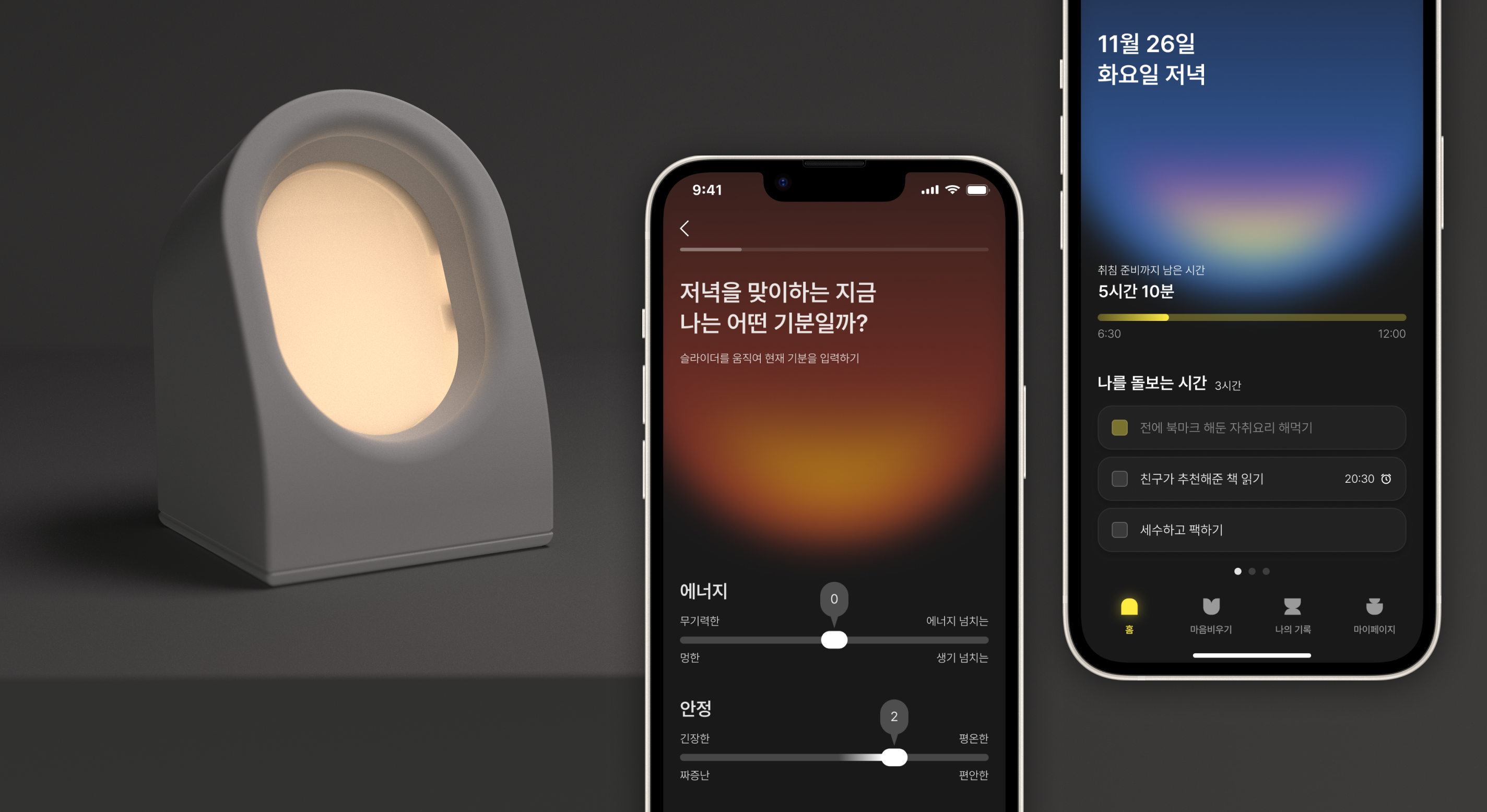
- This undergraduate graduation project approaches mental health issues among young adults through the lens of sleep and the evening experience. Through research and problem reframing, I redefined the core issue as difficulties in regulating emotion and stimulation during the evening. I ultimately designed and prototyped EVNIIN, an app and smart-lighting-based product-service system that supports self-awareness, evening planning, environmental cues, and bedtime preparation.
- Role: Solo project execution (user research, service planning, UI/UX design, Arduino and Flutter prototyping).
2 Context
The project began as a healthcare service for improving mental well-being.
Following the design brief from the sponsor, HUROM, this undergraduate graduation project began as an exploration of assistive tools and services for mental healthcare that could help alleviate psychological anxiety and depression.
Young adults need support for mental health management.
I focused on the social context in which the number of patients in their twenties diagnosed with depression increased by 127.1% and anxiety disorders by 86.8% over five years, from 2017 to 2021. 1 I also considered HUROM’s interest in reaching a new customer base as its existing customer demographic continues to age.
Based on this, I identified people in their twenties as the primary target group, as they were likely to have a strong need for mental health support, and explored solutions that could be integrated naturally into their everyday lives.
3 Approach
3-1 Desk Research & Competitive Analysis
Young adults, especially Gen Z, are highly interested in improving quality of life and are receptive to mental healthcare.
According to online research reports, people in their twenties, especially Gen Z, tend to (1) regard mental healthcare as part of self-care, (2) show strong interest in building healthy and productive daily routines, and (3) seek sensory satisfaction and immersive experiences as a way to escape stress in everyday life.
I identified an opportunity in product-service solutions that support self-care in everyday life.
To locate a realistic opportunity space, I mapped the market across three dimensions: target user, problem addressed, and mode of intervention. I collected 57 existing mental healthcare solutions, including both products and services, and organized them into a Venn diagram according to the main requirements of this project. The groups in the diagram were defined as follows:
- WHO: Solutions targeting individuals in need of self-care
- WHAT: Solutions addressing specific mental health conditions
- HOW: Solutions involving tangible products or direct interventions
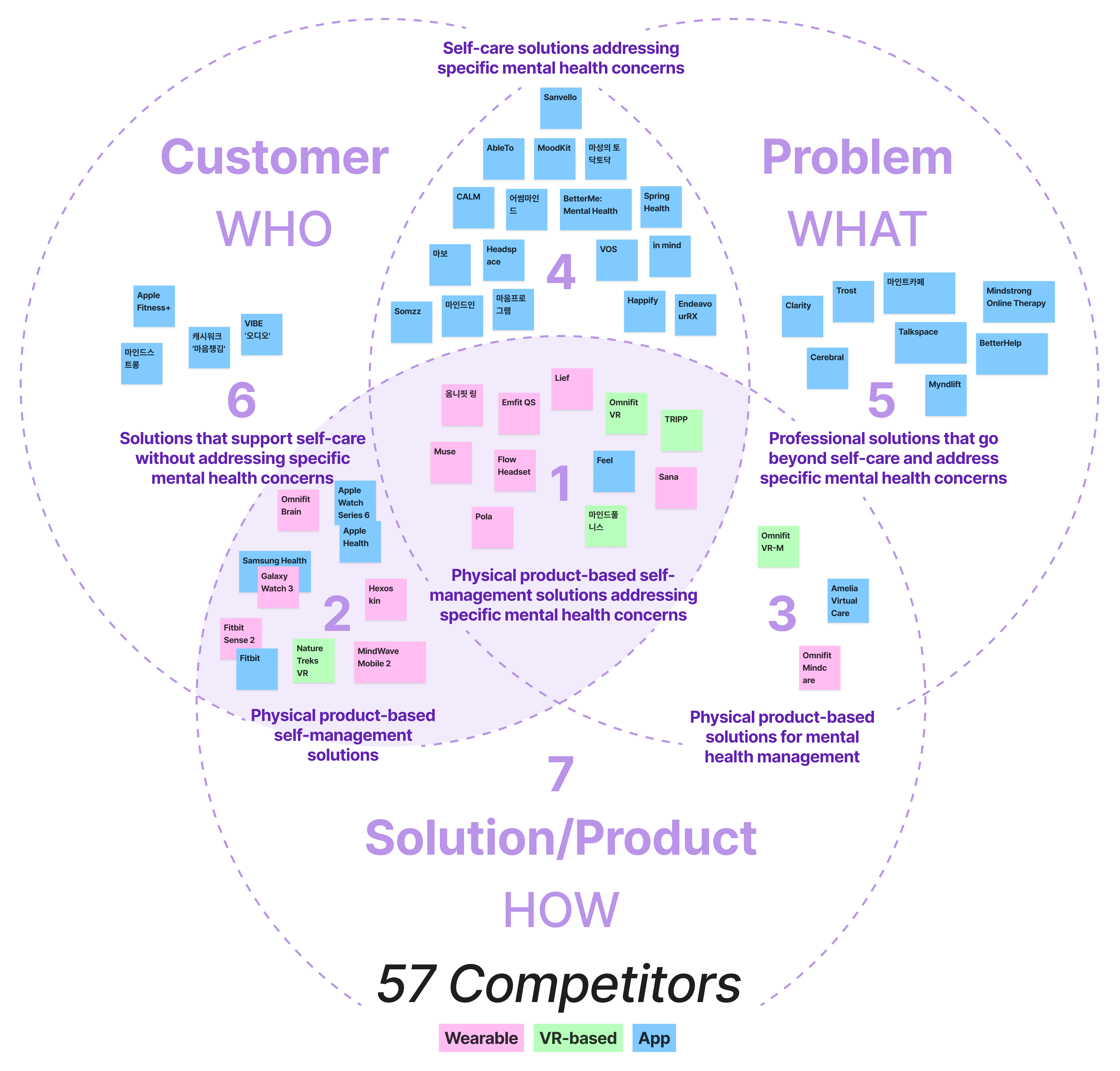 Competitor analysis Venn diagram.
Group 1 represented the most ideal area within the Venn diagram, but it was beyond the scope of this project because it relied on costly specialized technologies or provided professional treatment for specific symptoms or conditions.
Group 2, however, suggested a more realistic opportunity: a product-service solution that could indirectly support mental health by helping individuals better care for their everyday lives.
Therefore, I decided to focus on a product-service solution that indirectly supports people in cultivating their daily lives in healthier ways.
3-2 Exploratory Research and Problem Definition
To identify user-centered design opportunities within the chosen direction, I conducted exploratory research with experts from the campus healthcare center and men and women in their twenties.
Expert Interviews
I interviewed one full-time counselor and one physician at the UNIST campus healthcare center. These interviews provided expert perspectives on the major mental health issues that young adults experience and on effective ways to support them.
Key findings:
Problem spaceThe primary symptoms of mental health issues among young adults are anxiety, depression, and insomnia, often caused by career-related concerns and interpersonal conflicts.Problem spaceMost people experience sleep problems before recognizing broader mental health problems.Solution spaceBeyond medication, it is important to sustain basic self-care activities such as sleep, exercise, and counseling or coaching.
User Study
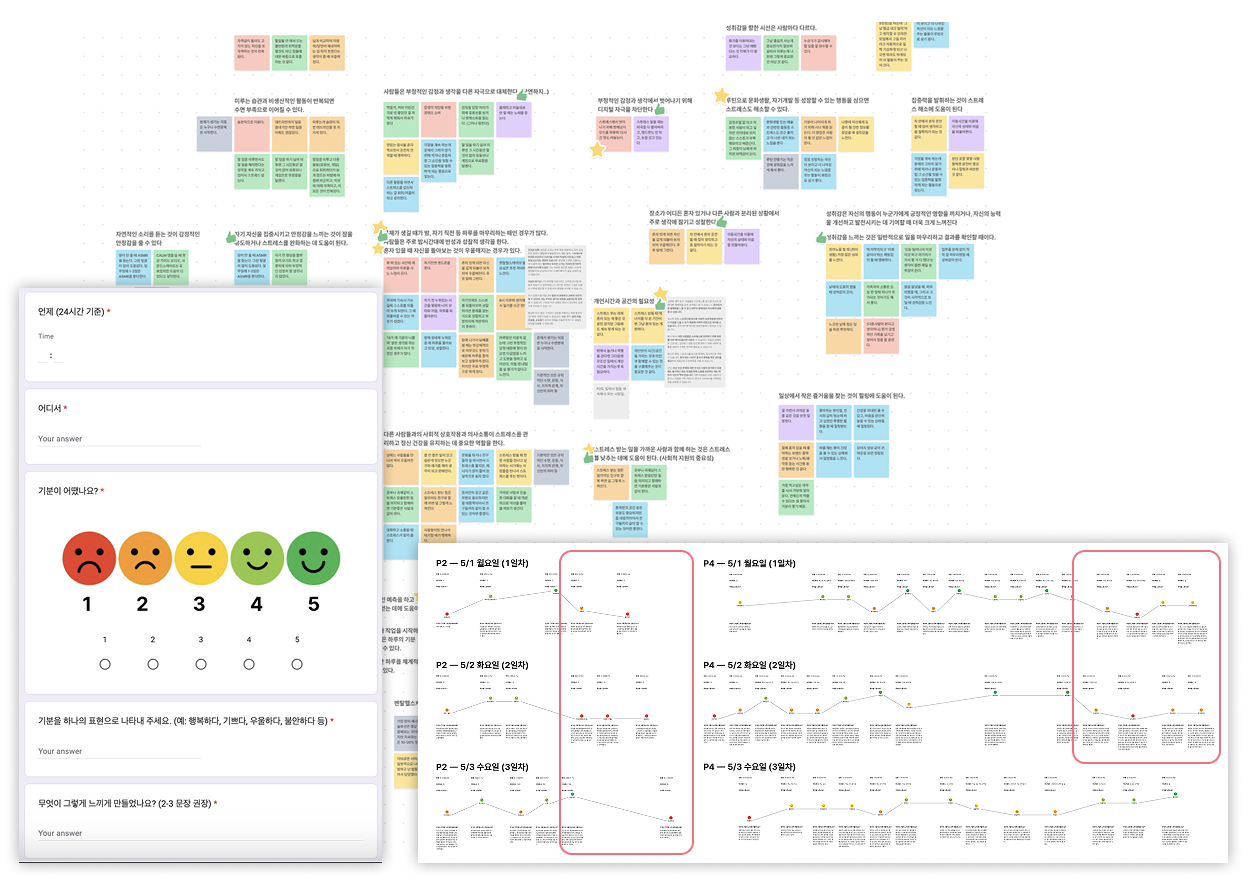
I conducted a user study with six men and women in their twenties, aged 21 to 28, who were interested in mental healthcare products and services. Based on real-time emotion logging over three days, I conducted semi-structured interviews and analyzed the results through affinity mapping.
Key findings:
Problem spaceNegative emotions and ruminative thoughts tend to arise mainly at night or before bedtime, near the end of the day.Solution spaceActivities for oneself and maintaining healthy routines help reduce stress and promote happiness.
Problem Definition
The user study showed a clear tendency for negative emotions and rumination to intensify before bedtime. This seemed closely related to the sleep problems mentioned in the expert interviews, so I set sleep as the central problem space of the project.
Young adults experience issues such as depression and insomnia as a result of the many stresses of daily life. In particular, stress-driven negative emotions and thoughts tend to become activated in the evening, at the end of the day. This state interferes with healthy sleep, and sleep problems in turn lead to reduced daytime functioning and additional stress, creating a vicious cycle.
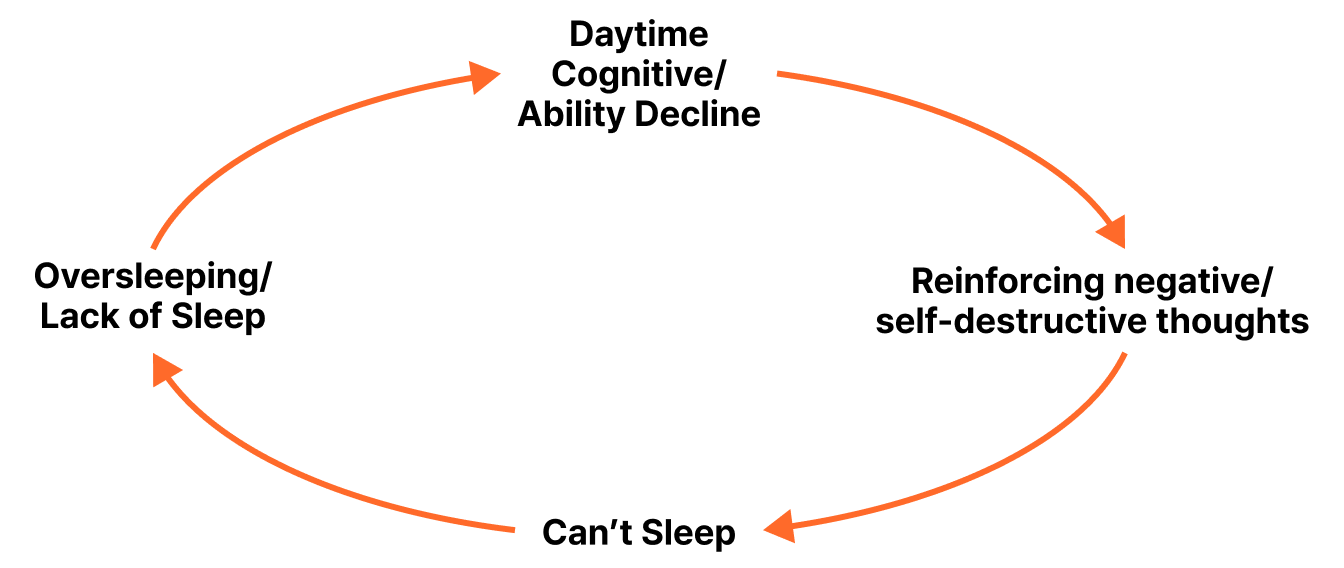 The vicious cycle between sleep problems and negative emotions.
Although people know that maintaining healthy routines and making time for themselves is important, it is not easy to spend the evening, which should function as a time of recovery, in a genuinely healthy way.
Based on this understanding, I defined the design problem as follows:
The time before bed should be a period for recovery and preparing for sleep, but for many young adults it is instead experienced as a time when negative emotions and rumination intensify, leading to a vicious cycle of sleep problems and mental health problems.
3-3 Exploring the Solution Space
Existing products related to sleep tend to focus on making sleep start earlier.
Products such as sleep-inducing lights, sleep robots, sleep tracking services, and tools for creating optimal sleep environments mainly aim to accelerate sleep onset.
Practicing sleep hygiene is widely recommended for healthy sleep.
Sleep hygiene refers to the set of habits recommended for better sleep. It includes guidance on sleep schedules, pre-sleep activities, attitudes toward sleep, and the sleep environment, such as maintaining regular sleep habits and avoiding stimulating activities before bed.
The issue is not that people do not know sleep hygiene matters. The more important design challenge lies in the gap between knowing and actually practicing it.
While existing solutions focus on bringing forward the moment of sleep onset, I began to question whether users’ behavior and willpower were already breaking down at an earlier stage.
3-4 Additional Research and Problem Reframing
To understand more concretely why people fail to practice sleep hygiene, I conducted additional research focused on why people do not go to bed even when they know they should.
Bedtime Procrastination
Bedtime procrastination refers to voluntarily going to bed later than intended despite the absence of external reasons. Research reports that people with higher levels of bedtime procrastination also show higher levels of depression and anxiety, as well as lower sleep quality. 2
A study by Prof. Suyeon Seo’s research team at Sungshin Women’s University, conducted with 60 adults in their twenties, found that the main psychological reasons for delaying sleep were to escape negative thoughts or unpleasant feelings (31.3%) and to reward oneself after a hard day (26.5%). 3
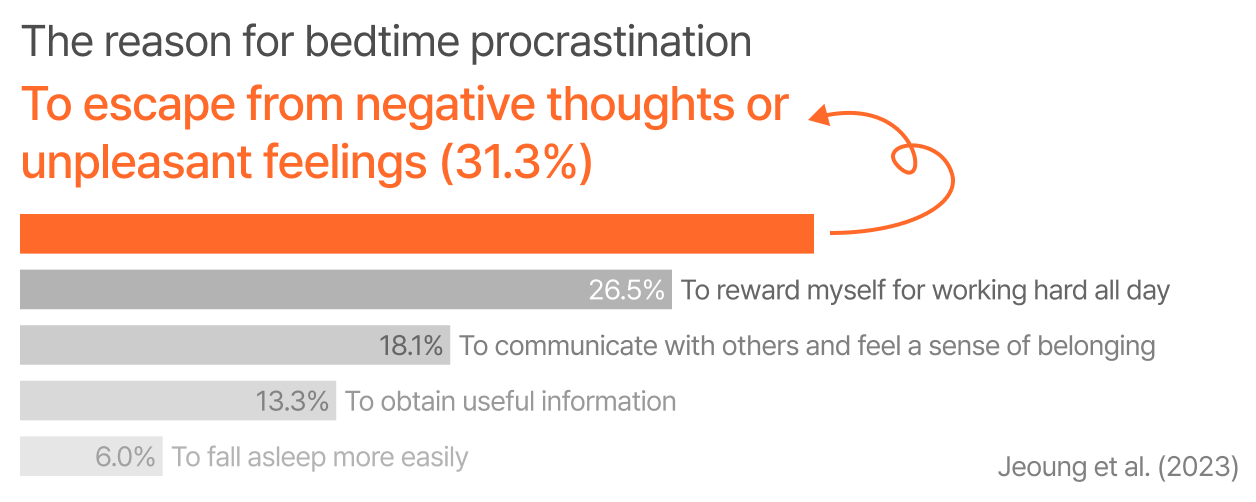 Reasons why adults in their twenties engage in bedtime procrastination.
This suggests that unmet psychological needs in daily life may be one of the causes of bedtime procrastination.
User Interviews
I conducted in-depth interviews with five people in their twenties who considered themselves to delay their bedtime. Before the interviews, I also administered the Bedtime Procrastination Scale (BPS) 4 to support the analysis.
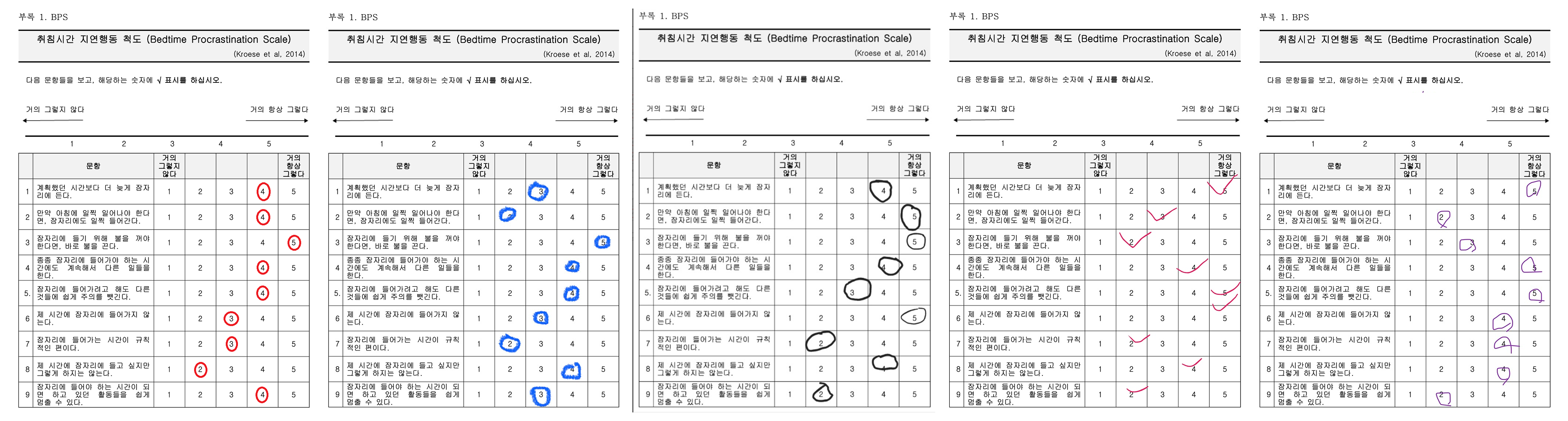
Key findings:
Problem spaceUsers with stronger bedtime procrastination tendencies (BPS score 31 or above) were likely to fall into quick and easy digital stimulation, such as Instagram Reels or YouTube Shorts, when they could not actively relieve stress through hobbies or other activities.Problem spaceThis delayed sleep onset and led them to go to bed without sufficient stress relief, often worsening their negative emotional state.- Similarly, prior research reports that when people fail to alleviate negative emotions in appropriate ways, this can negatively affect sleep, and they may attempt emotional regulation through bedtime procrastination itself. 5
Solution spaceTo interrupt negative thoughts and shift users away from bedtime procrastination, changes in the physical environment or appropriate external intervention are essential.
The Interaction Between Sleep and Emotion
Through additional literature review, I found that sleep and mood are closely intertwined and can either reinforce or worsen one another. Sleep deprivation increases negative emotional responses such as irritability, frustration, and mood swings, and can make people more sensitive to emotionally stressful stimuli. 67 Conversely, cognitive and emotional activity during wakefulness, such as distress, worry, and rumination, can reduce subsequent sleep quality and make sleep more fragmented. 89
In particular, negative emotions and high arousal before bed interfere with the process of falling asleep, and insufficient rest can undermine emotional stability and daily functioning the next day. 10 In other words, the emotional state of the evening and sleep are not separate issues. When one worsens, the other is likely to worsen as well.
This understanding suggested that simply focusing on making sleep start earlier would not be enough. The user’s emotional and stimulation state before sleep also had to be addressed.
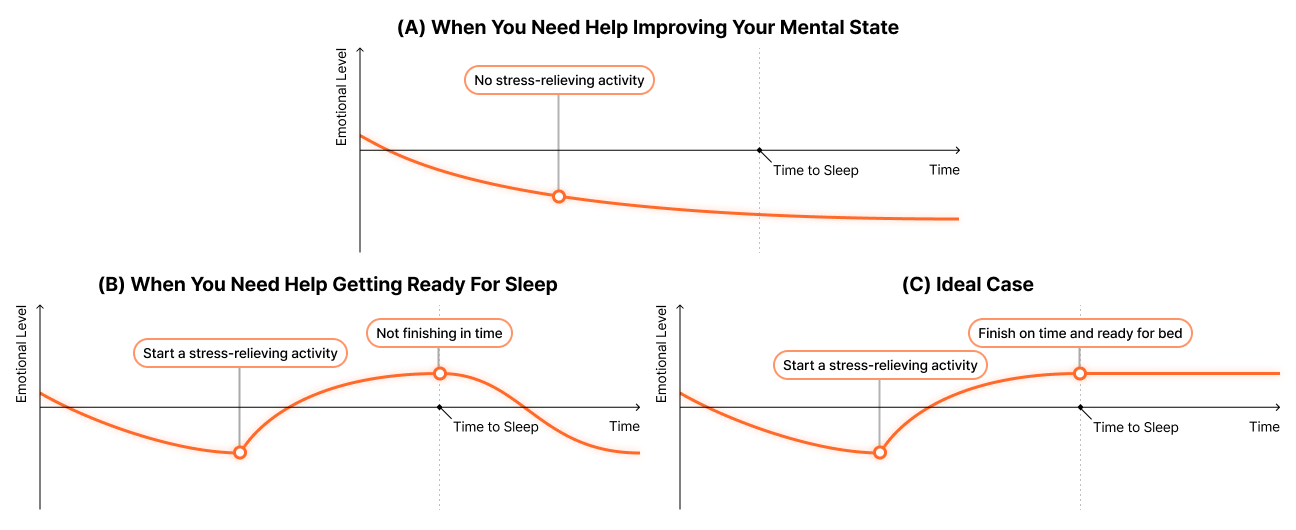
Problem Reframing
I therefore reframed the earlier time-based problem definition into a behavior-cause-based one:
Young adults who show bedtime procrastination often struggle to regulate emotion and stimulation appropriately during the evening, and as a result, fail to maintain a regular sleep routine. This leads to a vicious cycle of sleep problems and mental health problems.
3-5 Design Concept Development
Design Direction
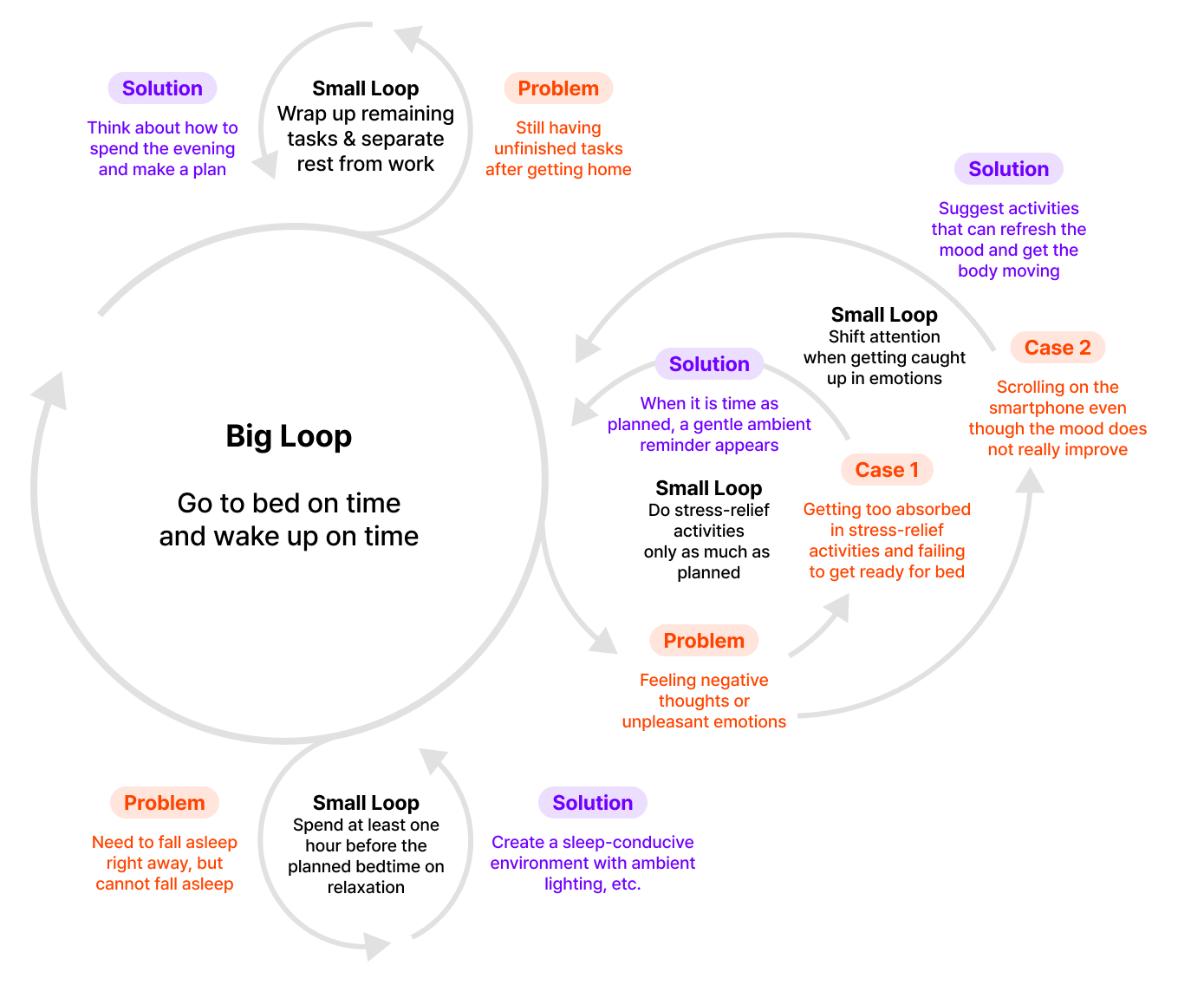
I set the ultimate goal as helping users spend the evening well so that they can fall asleep on time.
Even if users fall out of the intended behavioral loop, the solution should help them return to it. Based on the problematic situations identified earlier, I established the following three sub-goals for the solution:
Sub-goals
Help users recognize and relieve negative emotions during the evening.
Provide external cues that redirect users from quick and easy digital stimulation toward restorative activities.
Secure a buffer period before bedtime so users can focus on relaxation and sleep preparation.
In other words, this design assumes repeated cycles of drifting away and returning during the evening, and focuses on helping users come back to a restorative path even after they fall out of it. I also determined that each problematic moment would require an appropriate form of prompting to trigger behavioral or attentional shifts.
Designing Behavioral Prompts
For behavioral shifts to succeed, appropriate triggers are necessary.
The issue is not that people do not understand the need to spend the evening well. Rather, motivation and ability tend to drop easily in the evening, when they are tired and stressed, making it difficult to translate that awareness into action.
To better understand and design behavior change, I drew on Fogg’s Behavior Model (FBM). FBM explains that behavior occurs only when three elements are present at the same time: motivation, ability, and trigger. 11
- Motivation: the user’s desire to perform the behavior
- Ability: the degree to which the behavior feels feasible
- Trigger: the external cue that initiates the behavior
To provide effective triggers, it is important to consider both motivation and ability. If a trigger is given when motivation is low, it may result in distraction. If it is given when ability is low, it may result in frustration. According to FBM, the appropriate type of trigger varies by situation:
- Spark: a trigger designed with motivational elements for situations with low motivation
- Facilitator: a trigger that makes action easier when motivation is high but ability is low
- Signal: a reminder-type trigger that works when both motivation and ability are high
Based on FBM and the earlier research findings, I identified the moments in the evening when behavior change was needed and what type of behavior-change support each moment required.
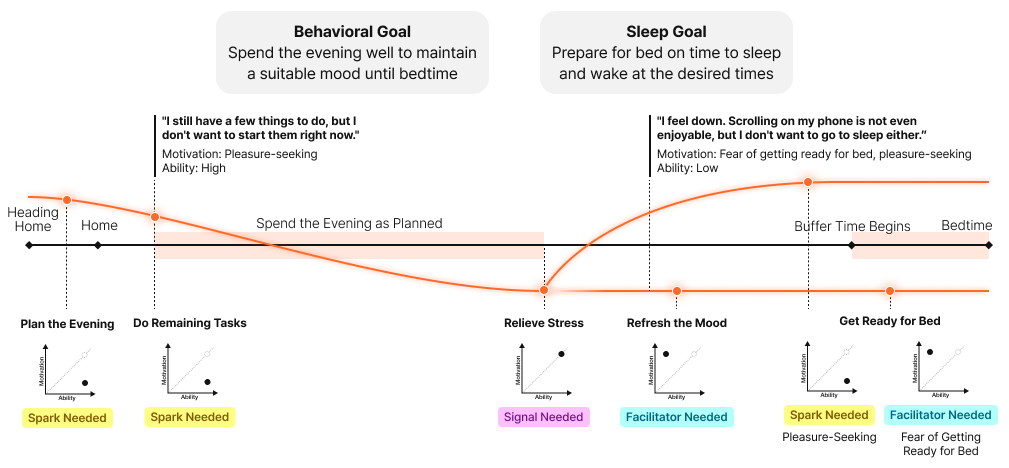 Triggers needed at each stage of the evening routine.
To help users practice desired behaviors even when they were mentally exhausted in the evening, I reflected the relationship among motivation, feasibility, and behavioral prompting in the design as follows:
- Planning the evening and following the evening plan: users have the ability, but not enough motivation, so motivational elements are needed.
- Relieving stress: users have both motivation and ability, so a reminder-level prompt is sufficient.
- Refreshing mood: users have motivation but limited ability, so the design should make action easier.
- Preparing for sleep: while users are engaged in stress-relief activities, they may have ability but low motivation, so motivational support is needed. On the other hand, when they are in a negative emotional state, they may have motivation but reduced ability, so the design should lower the barrier to acting.
Concept Development
It was not easy to ideate ways to deliver these triggers in actual use. At first, I thought strong rewards would be necessary to drive users toward specific actions. However, extrinsic rewards can easily backfire, and because each person’s disposition and circumstances differ, a system that forces particular behaviors could actually increase disengagement.
Sleep problems are among the most common health issues in early adulthood. The twenties are a period marked by rising social and academic demands, alongside lifestyle changes such as heavier device use and caffeine consumption. Falling asleep on time requires proper regulation of arousal before bed, and that in turn requires users to coordinate their evening according to their own context and habits.
From this perspective, I came to believe that for the design to become something users would continue using, becoming a better version of oneself had to function as the reward itself. Therefore, the design should help users decide for themselves how to spend the evening based on self-awareness and sleep hygiene, and then support them in putting that into practice.
I focused on the experience of cultivating an evening that fits oneself through self-awareness.
Taken together, the research suggested that young adults recognize the importance of self-care and better daily routines, yet are easily pulled toward fast and stimulating activities in the evening when fatigue and stress accumulate.
They also tend to respond well to experiences that provide sensory satisfaction and immersion, and that allow flexible choices based on their own condition and needs.
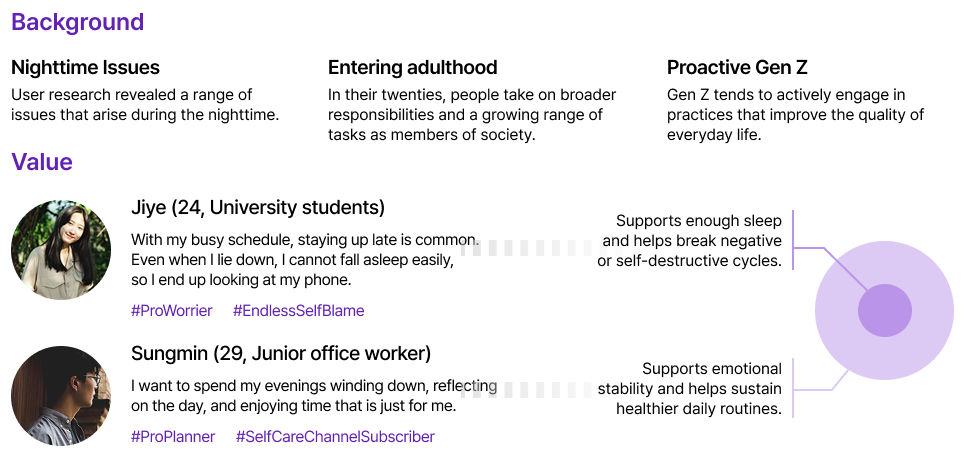
Therefore, rather than unilaterally controlling users or imposing a correct answer, this design aims to help them recognize their own mood and condition at the end of the day, and to plan and adjust their evening according to that day’s circumstances. Instead of direct and burdensome intervention, it uses environmental cues and gradual behavior guidance to help users transition naturally into an evening routine and bedtime preparation.
Based on this, I summarized the final concept into four design principles:
- Help users recognize their emotional state and level of arousal.
- Help users plan an evening that feels satisfying to them.
- Provide environmental cues that reduce the burden of behavioral transitions.
- Support the body and mind in transitioning smoothly into sleep just before bedtime.
4 Outcome
EVNIIN: A product-service system that accompanies the evening
EVNIIN is an application and smart-lighting-based product-service system for young adults who struggle to maintain sleep routines because they find it difficult to regulate emotion and stimulation before bed. It supports users within one continuous flow by helping them recognize their evening state, plan an evening that fits that day, release emotion, and transition naturally into sleep preparation. The app functions as a personal interface for self-awareness and planning, while the smart light functions as an environmental interface that prompts behavior shifts and bedtime preparation through changes in the room environment.
Four core experiential axes of EVNIIN
I translated the design principles derived from the research and concept development stages into four experiential axes that users would actually encounter while using EVNIIN during the evening.
Self-awareness: Helps users recognize their emotional state and level of arousal at the start of the evening.Time management for fulfillment: Helps users plan their evening by balancing the kinds of rest and activity they need that day.Environmental cues: Encourages behavioral transitions through soft environmental interventions such as light and sound instead of push notifications.Sleep hygiene: Helps the body and mind transition naturally into sleep through buffer time, worry release, and guided breathing.
These four axes do not operate as separate features. They work together as one connected evening routine.
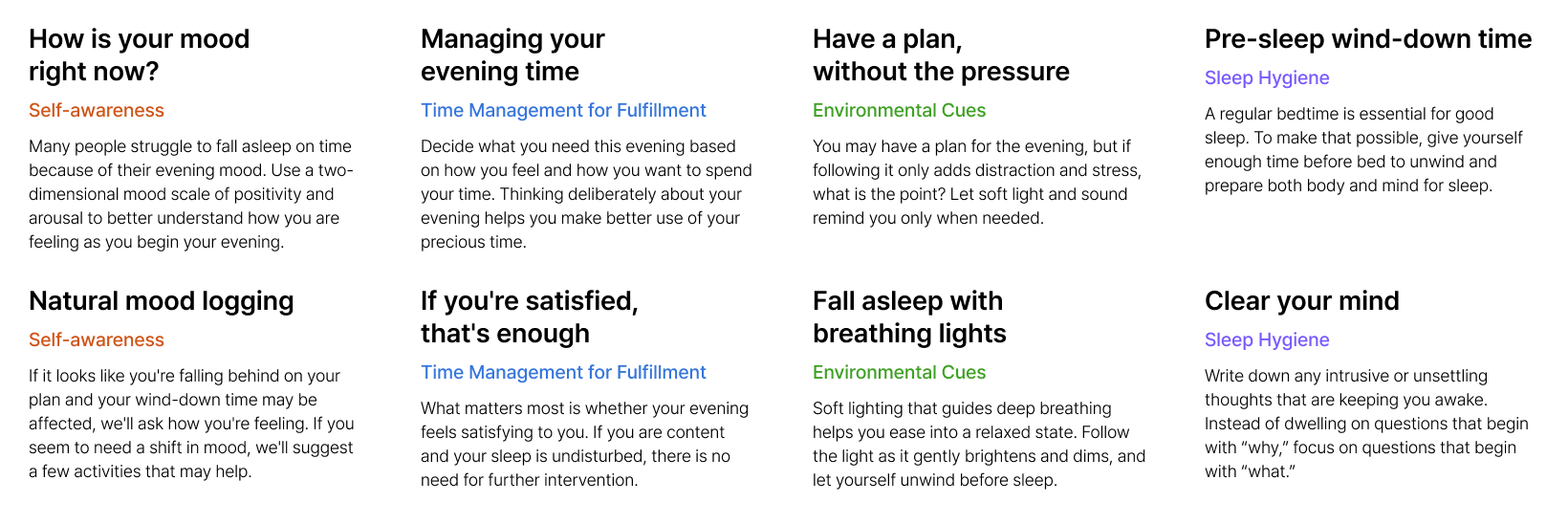 Concept card explaining EVNIIN.
4-1 Application Design — App interactions that support the evening routine
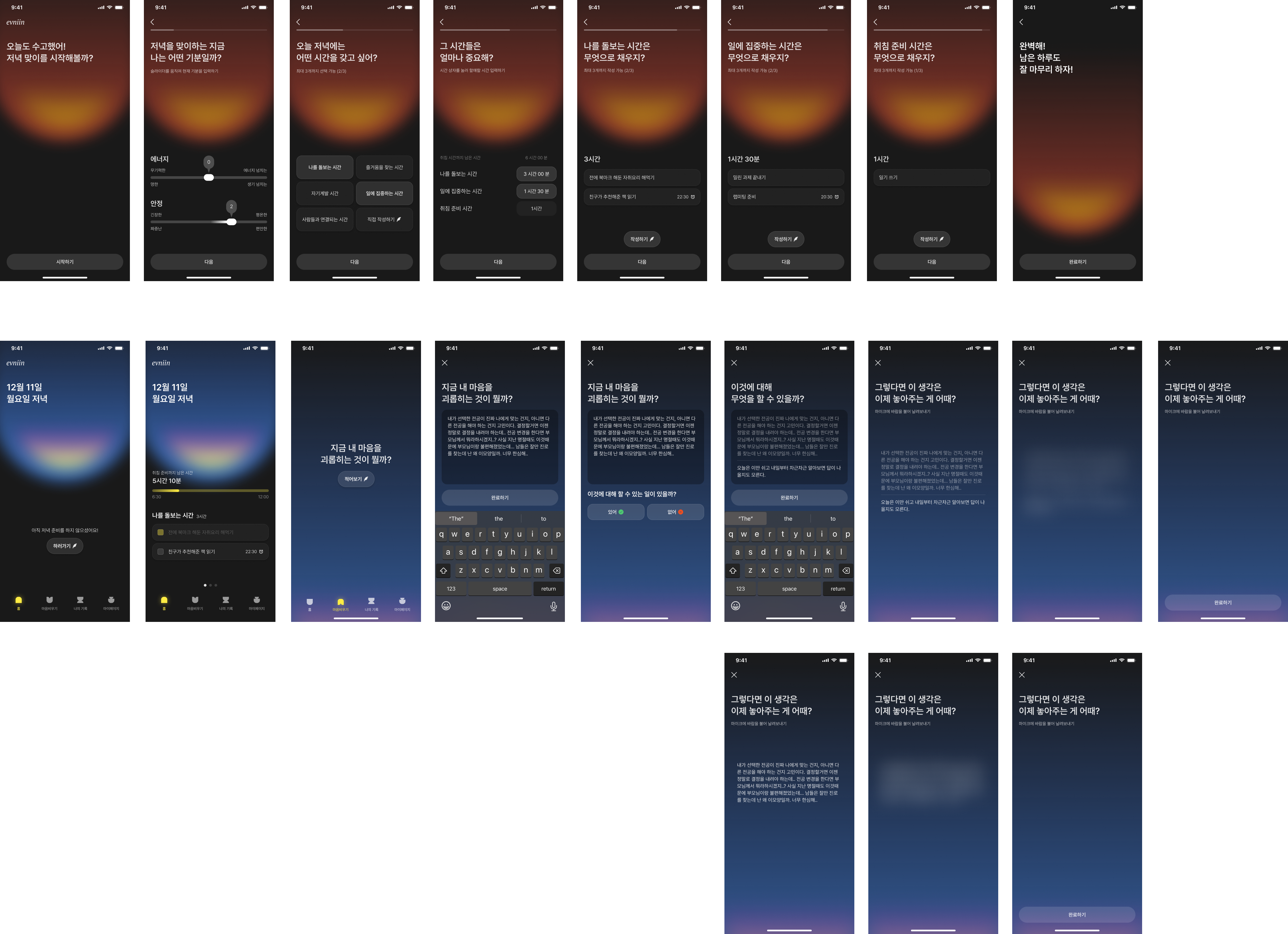
The application was designed as a core interface that supports self-awareness, time management for fulfillment, and sleep-hygiene, helping users reflect on their state and regulate the evening on their own.
-
Starting the evening: checking in and getting ready
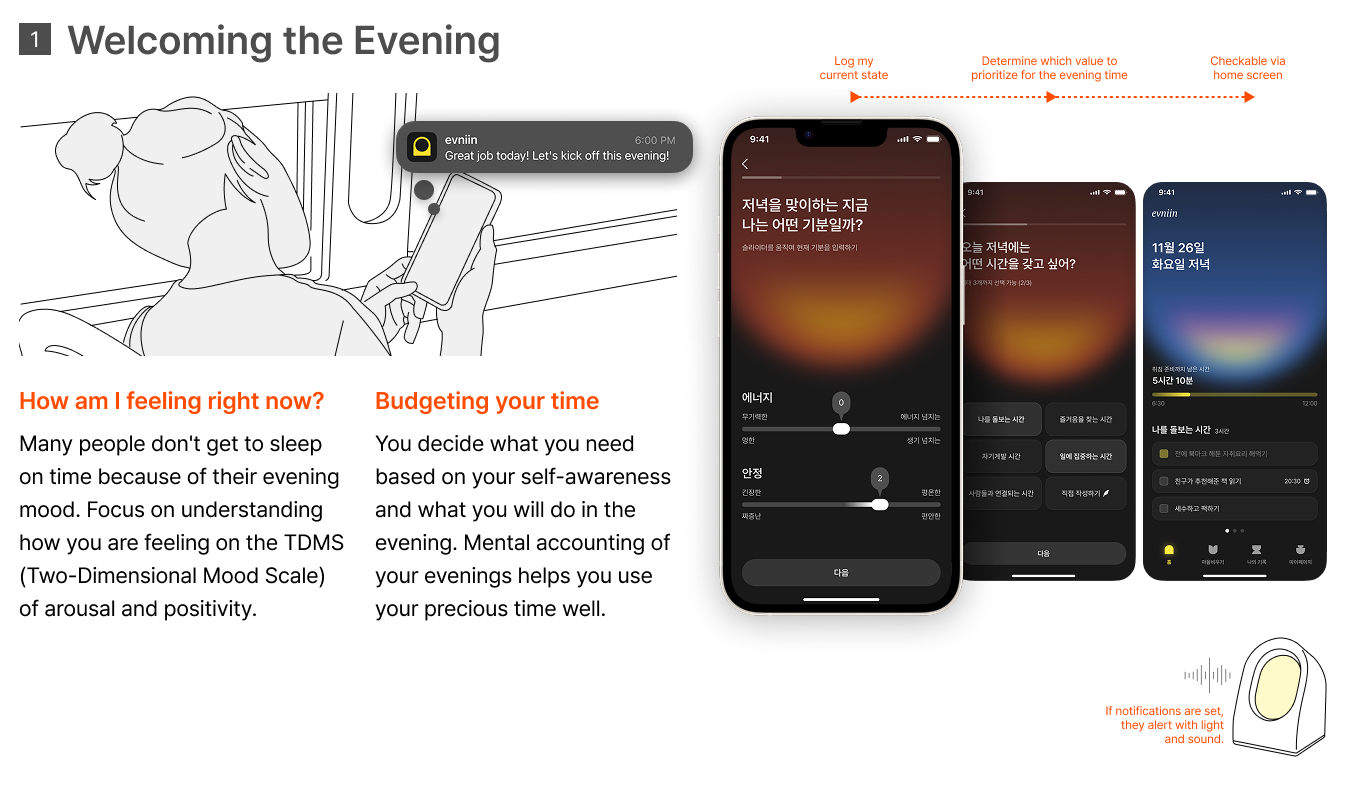
When users receive the evening notification, they record their current emotional state and arousal level through an affective slider and a two-dimensional mood scale. This helps them notice vague fatigue or stress instead of overlooking it, and check what kind of state they are beginning the evening in.
-
Planning the evening: adjusting time according to what I need
Based on their current state, users reflect on what they need that evening, adjust the balance between rest and activity, and plan both their buffer time and what they want to do during the evening. This was designed not as simple task management, but as an opportunity for users to shape a satisfying evening for themselves.
-
Clearing worries: releasing emotion and externalizing rumination
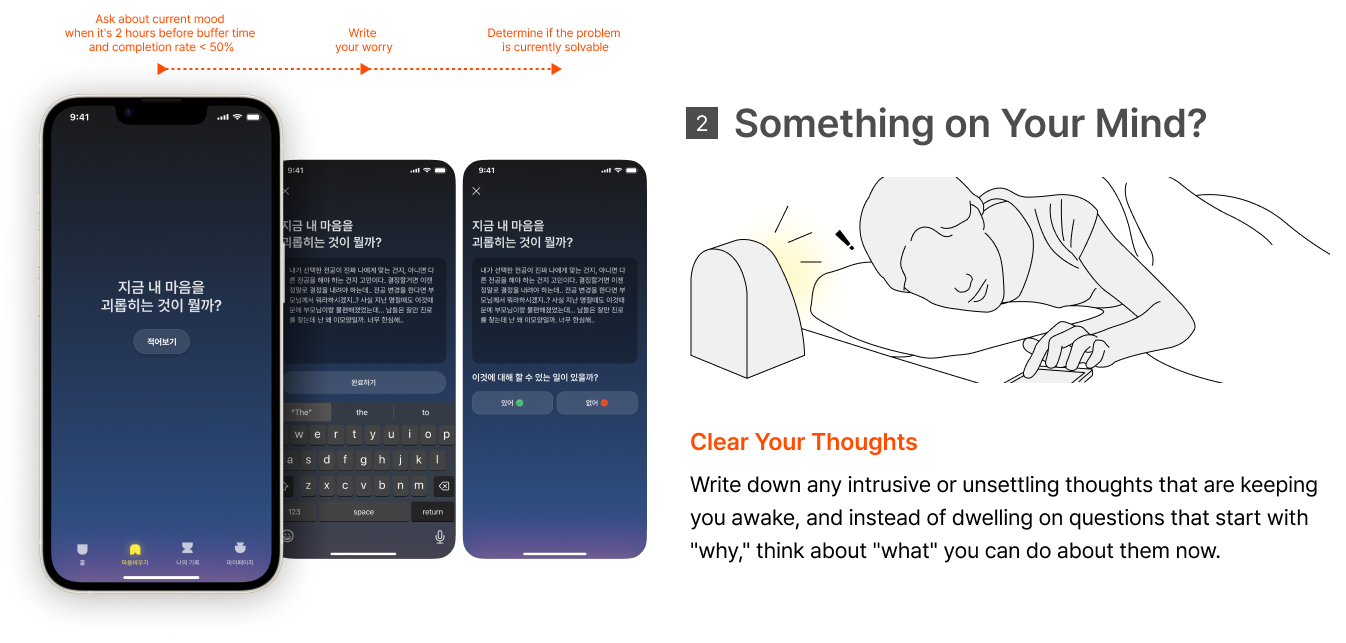
When users are emotionally unstable or have a low task completion rate, the app suggests a “worry release” activity. Users write down worries and complicated thoughts from their minds, externalizing rumination and reducing cognitive arousal before bed.
I implemented a dark-theme prototype in Flutter that reflects this core user experience flow.
4-2 Lighting Design - Environmental cues and the experience of transitioning into sleep
The lighting was designed as a key environmental interface centered on the axes of environmental cues and sleep hygiene, helping users move away from smartphone-centered stimulation and transition into an evening routine and bedtime preparation.
-
Environmental intervention instead of direct notifications
Even if users make an evening plan, the process of carrying it out should not become another source of stress. Therefore, instead of direct and burdensome methods such as push notifications, I used soft environmental cues through changes in brightness and color, blinking patterns, and sound to guide behavioral transitions.
-
Creating a pre-bed buffer period
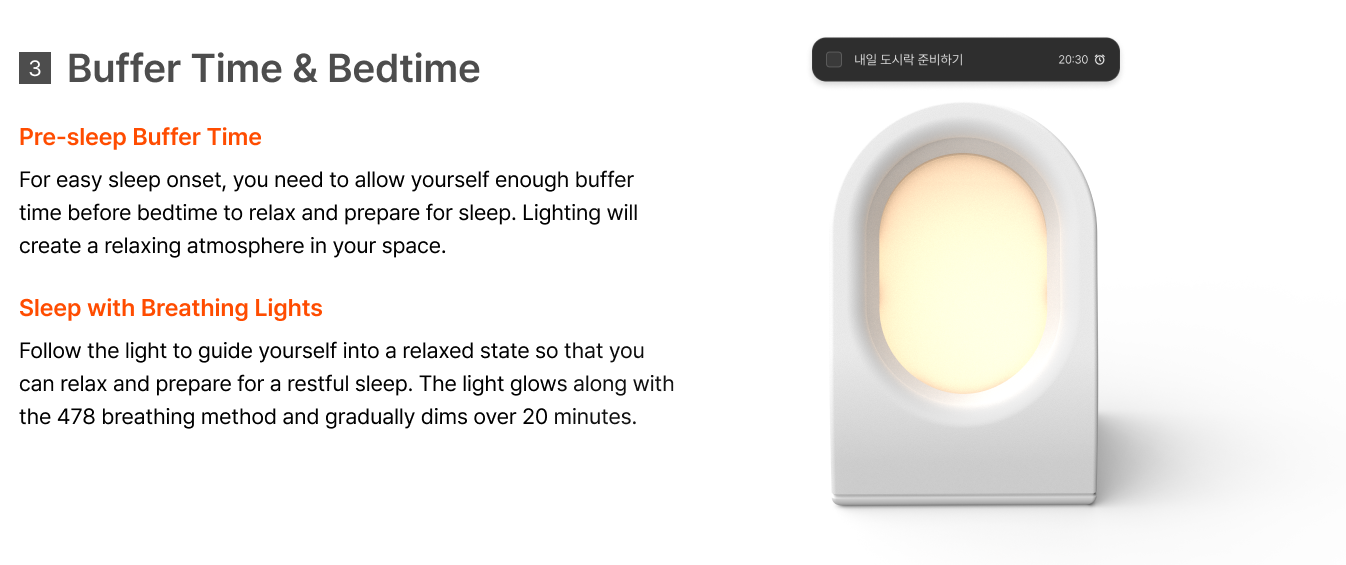
To fall asleep on time, users need a sufficient buffer period before bed during which both body and mind can unwind. The light provides a chosen mood of light and sound, creating an environmental frame that transforms the final part of the evening into time for sleep preparation.
-
Transitioning into sleep through the rhythm of light
Just before bed, the lighting provides a 4-7-8 breathing guide by prompting users to breathe along with a rhythm of brightening and dimming light. This was designed not as a simple visual effect, but as an experiential element that directly lowers bodily tension and supports sleep onset.
The form of the light was designed using the motif of an airplane window, symbolizing preparation for a journey away from daily life and toward rest and the unconscious world.
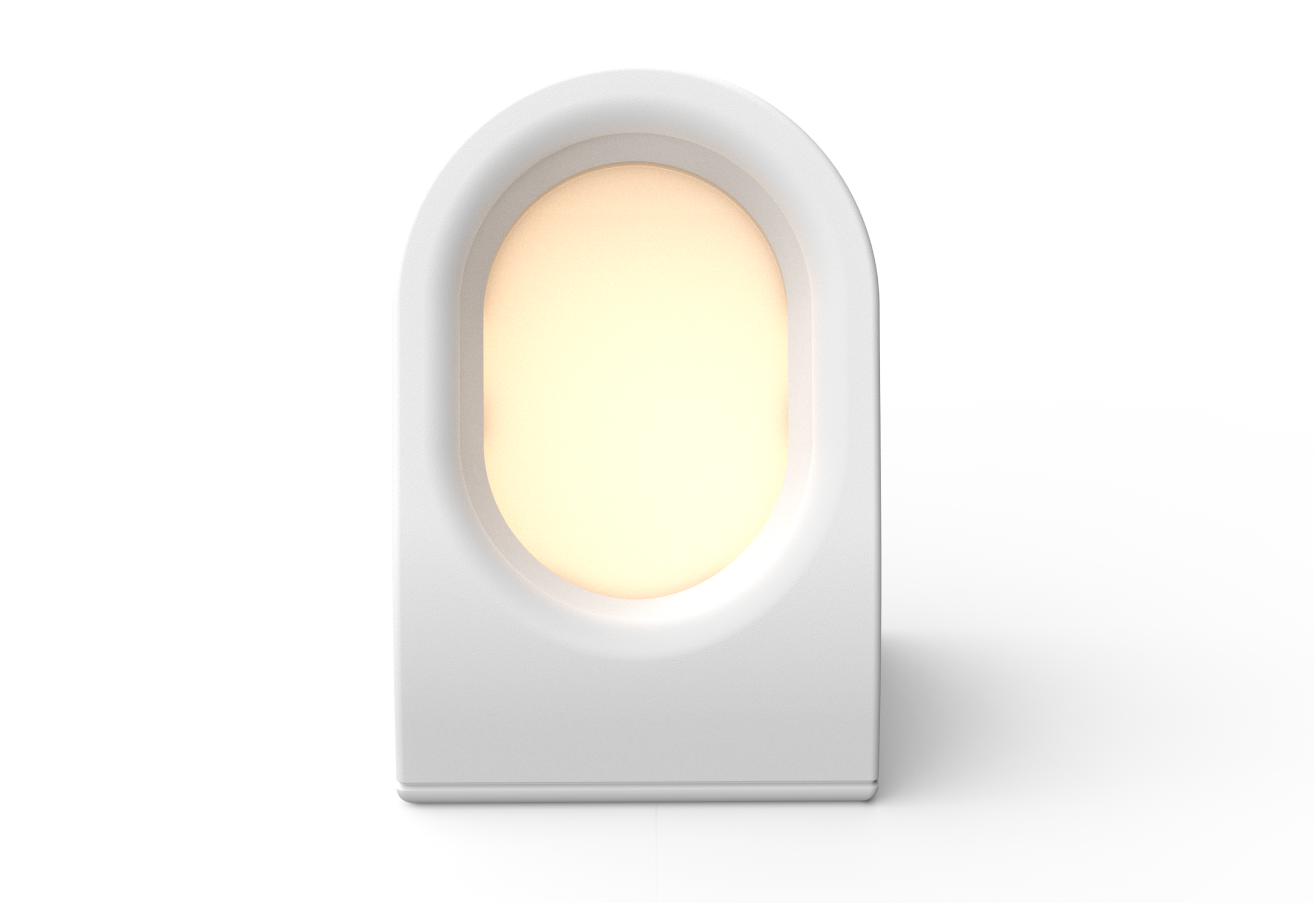
I also built a prototype by connecting an Arduino MKR WIFI 1010 with BLE communication. It supports buffer time with user-defined light and sound settings, guides breathing through blinking brightness before bed, and then gradually turns off.
4-3 Usage Scenario
The following scenario illustrates the overall experience flow in which the user prepares for the evening, returns to a restorative path even after drifting away, and naturally transitions into sleep preparation.
-
Beginning the evening: recognizing one’s state and setting the direction of the evening
At the start of the evening, the user checks their emotional state and level of arousal, and reflects on what they need at that moment. Based on this, they gauge the balance between rest and activity and begin the evening more intentionally.
-
Mid-evening: returning to a restorative path instead of falling into stimulating distractions
During the evening, users can easily drift toward short, intense digital stimulation because of fatigue, stress, and pressure from unfinished tasks. At this moment, the system offers low-burden environmental cues and emotional release activities to help them return to the kind of evening they actually need.
-
Sleep transition: moving body and mind into a sleep-ready state
Before bed, simply deciding “I should sleep now” is not enough. Through buffer time, users gradually lower the day’s accumulated tension and, by following the rhythm of light and breathing, transition body and mind into a state more suitable for sleep.
-
The next day: reflecting on the experience and preparing for the next evening
The next day, users briefly review the previous night’s sleep and evening routine, checking both their condition and their follow-through. This helps them gradually build an evening routine that fits them better over time.
4-4 Significance of the Design Outcome
Unlike existing sleep solutions that mainly focus on advancing the point of sleep onset itself, EVNIIN was designed as a system that intervenes one step earlier, in the regulation of emotion and stimulation during the evening. It also seeks to encourage sustainable behavior change through self-awareness and environmental cues rather than direct control or strong rewards. In this way, it implements a sleep-routine experience within a product-service system that combines the app and lighting to address both cognitive planning and changes in the physical environment.
5 Reflection
- Redefining the problem rather than staying with the first one: At the beginning of the project, I started from a broad direction around mental healthcare. As the research progressed, however, I realized that the more important issue was not the moment right before sleep itself, but the earlier evening period. Because this was also an area that existing solutions had addressed less directly, I saw it as a more fundamental design opportunity. Through this process, I learned the importance of revisiting the problem definition by following the causes of user experience and behavior, rather than staying fixed on the first framing.
- Choosing to focus selectively on core experiences: In a landscape where many sleep and healthcare services already exist, finding a differentiated direction was not easy. Rather than attempting to design every possible function in detail, I chose to focus on core experiences that seemed most important for real behavior change, such as evening preparation, emotional release, buffer time, and transition into sleep, and implemented them as an MVP prototype. This made me realize that when proposing a new concept, it is often more important to make the central value of the design clearly visible within a limited scope than to show many features at once.
- Designing for agency rather than control: Through this project, I came to believe that especially during the evening, when fatigue and stress are high, direct control or strong rewards can become burdensome rather than helpful. I have also personally experienced how even rewarded activities can start to feel overwhelming the moment they turn into obligations. That led me to believe that approaches based on self-awareness, soft environmental cues, and gradual transition into sleep can become more sustainable forms of intervention. Even when aiming toward the same goal, it is important to design an experience that is not imposed unilaterally, but instead considers the user’s condition, context, and motivation.
- The need for follow-up evaluation to verify behavior change effects: Although I implemented working prototypes of the core app and lighting functions, I was not able to evaluate them with real users over a longer period of time within the limited project schedule. Further evaluation is therefore needed to understand how effectively emotion logging, evening planning, environmental cues, and sleep-transition mechanisms work in everyday life, and how they affect users’ bedtime procrastination and evening experiences. In future work, I hope to use prototypes at an earlier stage to gather initial insights quickly and then continue into evaluation within real contexts of use.